
The Science Behind England’s Sparkling Wine Revolution
English sparkling wine is not an accidental novelty, and its rise is not explained by clever branding alone. The strongest wines are the result of a credible interaction between site, climate, grape variety, and method. Southern England offers the high natural acidity required for traditional-method sparkling wine, while warmer recent growing seasons have improved the likelihood of achieving physiological ripeness in Chardonnay, Pinot Noir, and Meunier.
The geological story is equally important. Across parts of Sussex, Kent, Hampshire, and beyond, vineyards occupy chalk landscapes formed during the Cretaceous period. According to British Geological Survey assessments, the underlying rock formation of southern England shares an identical Cretaceous origin with northern France. That connection does not make English wine a copy of Champagne. Instead, it provides a foundation for a distinct cool-climate style, shaped by the English Channel, local exposure, rainfall patterns, and a longer history of climatic variability.
For much of the modern era, Champagne appeared to have an unassailable advantage. Its reputation, distribution network, accumulated technical knowledge, and established appellation system placed it far ahead. Southern English producers are not overturning that history overnight. They are demonstrating, however, that comparable geological materials and increasingly favourable climatic conditions can support wines with similar structural credentials, while expressing a clearly English identity.
The Paris Basin Chalk Belt Explained
The chalk beneath many southern English vineyards belongs to the wider geological system of the Paris Basin. This broad belt extends through northern France and into southern England, appearing prominently in the North Downs, South Downs, and chalk landscapes of Hampshire. The continuity is geological rather than stylistic: a vineyard in Sussex does not automatically taste like one in Champagne, but both may draw on related Cretaceous deposits.
Chalk matters because its physical structure influences both drainage and water availability. Although often described simply as porous, vineyard chalk contains a network of fractures and fine pores that can absorb and store water, then release it gradually. This can moderate vine water stress during dry periods while preventing the prolonged saturation that encourages weak root systems. Where the chalk is sufficiently fractured, roots can penetrate deeply, giving mature vines access to a larger and more stable soil volume.
The key point is that chalk is not a flavouring ingredient. Minerals do not pass directly from bedrock into a wine in a simple, literal way. Instead, geology affects rooting depth, water movement, soil temperature, vigour, and the timing of ripening. These factors can help produce grapes with firm acidity, moderate sugar accumulation, and a flavour profile that often feels precise, saline, or chalky on the palate.
- Drainage reduces the risk of persistently waterlogged root zones.
- Moisture retention can support vines during increasingly variable summer conditions.
- Pale surfaces reflect light into the canopy and may assist ripening on suitable sites.
- Deep rooting can moderate vine growth and contribute to more consistent fruit development.
- Chalk slopes often provide elevation and exposure, two valuable tools in cool-climate viticulture.
In sparkling wine, this structure is particularly useful. Grapes are generally harvested earlier than they would be for a full-bodied still wine, preserving acidity and limiting alcohol. The base wine must then retain enough freshness to support secondary fermentation, lees ageing, and dosage. A chalk-influenced site can therefore contribute to the linear framework that allows a wine to develop complexity without becoming heavy.
Climate Shifts and Growing Season Mechanics
Climate is the other half of the explanation. England remains a maritime wine region, which means that average conditions alone do not determine success. Budburst, flowering, veraison, and harvest can each be disrupted by frost, rain, wind, or disease pressure. Warmer temperatures have improved ripening potential, but the most useful benefit is not simply heat. It is the increased probability of achieving mature fruit while retaining the acidity that gives English sparkling wine its shape.
Growing-season mechanics can be summarised in practical terms. During budburst, frost risk is critical because emerging shoots are highly vulnerable. Flowering requires relatively settled weather for successful fruit set. At veraison, a longer and warmer late summer can help Chardonnay and Pinot Noir accumulate flavour and sugar. Harvest then becomes a balancing exercise: grapes must be ripe enough to avoid green, hard flavours, but sufficiently acidic for a fresh base wine.
| Stage | What growers monitor | Why it matters for sparkling wine |
|---|---|---|
| Budburst | Frost, wind, and early-season temperature | Determines shoot survival and potential crop size |
| Flowering | Rain, cool conditions, and fruit-set consistency | Influences yield and bunch uniformity |
| Veraison | Heat accumulation, canopy health, and disease pressure | Supports flavour development and balanced ripening |
| Harvest | Sugar, pH, total acidity, and phenolic maturity | Sets the quality and ageing potential of the base wine |
Sussex benefits from extensive chalk terrain and maritime moderation, while Kent is often regarded as one of England”s warmer and drier major wine regions. Hampshire can offer a slightly cooler, longer ripening pattern, an advantage when gradual flavour development is prioritised. Historical Champagne conditions were once substantially more marginal than today, but climate change has shifted the comparison. Champagne has also warmed, which can bring riper fruit and lower acidity, while southern England has gained a greater number of viable ripening seasons.
The shift should not be overstated. A warm year does not erase England”s weather risk, and recent expansion has occurred alongside difficult harvests. The 2025 WineGB industry reporting described 2024 as a challenging year, with low yields even though national output still exceeded 10.6 million bottles. By 2023, reported vineyard acreage had passed 4,200 hectares, while longer-term projections suggest continued expansion. These figures indicate momentum, not guaranteed annual stability.
South Downs Terroir and the Sussex Chalk Escarpment
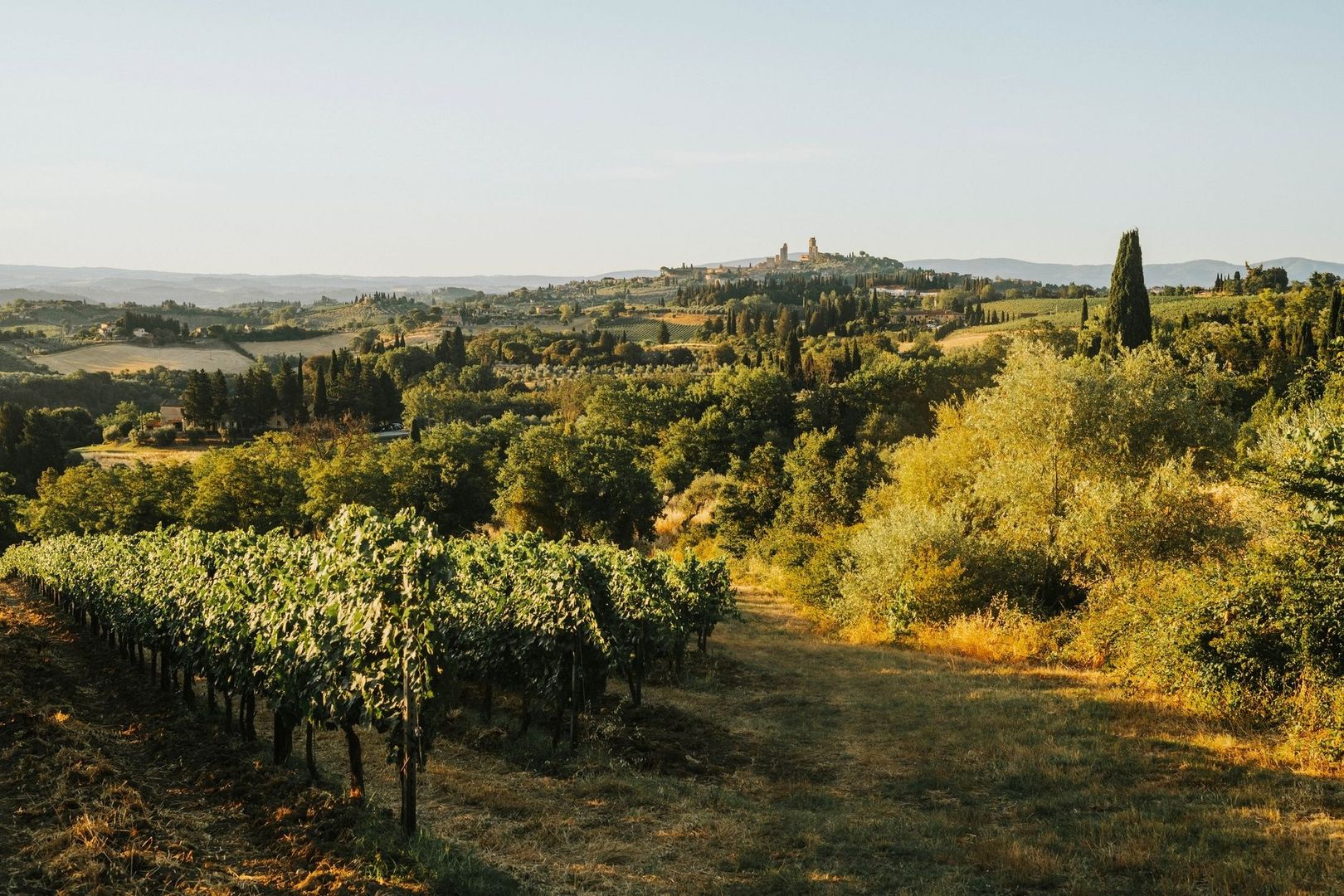
The South Downs provide one of England”s clearest examples of how landscape influences vineyard decisions. The escarpment and surrounding valleys create differences in elevation, slope, wind exposure, drainage, and frost behaviour over relatively short distances. A south-facing vineyard can receive stronger sunlight and warm more efficiently, while the maritime setting moderates extreme heat compared with many continental sites.
Elevation can reduce some frost risk by allowing cold air to drain away from slopes into lower ground, although it is not a complete safeguard. Spring frost remains a serious hazard, and growers may need active protection, careful pruning strategies, or site-specific canopy management. Slope angle also matters because it affects sunlight interception, machinery access, soil depth, and water movement. The best site is therefore not simply the steepest or highest one, but the location where these variables work together.
Maritime breezes create a useful but complicated influence. Air movement can help foliage dry after rain, reducing the duration of wetness that favours fungal diseases such as downy mildew and powdery mildew. At the same time, strong coastal winds can damage shoots, reduce fruit set, and increase evapotranspiration. Vineyard design must therefore balance ventilation with shelter, often through orientation, hedging, row layout, and disciplined canopy work.
Regional character is beginning to emerge without becoming rigid. Sussex is often associated with elegance, mineral precision, and bright acidity. Kent can show riper fruit and broader stylistic variation, while Hampshire is linked with freshness, purity, and extended ageing potential. These descriptions are useful starting points, not fixed rules. Producer decisions, vintage conditions, rootstock, picking date, pressing regime, and reserve-wine management can be just as influential as county boundaries.
For detailed landscape interpretation, Wealden geological documentation helps explain the relationship between South Downs slopes, chalk exposure, and vineyard siting. The practical lesson is straightforward: terroir is read at field scale. Two vineyards in the same broad region may differ significantly if one occupies a sheltered south-facing slope and the other sits on deeper clay with poorer air drainage.
A Practical Guide to Exploring Southern English Terroirs Firsthand
Wine tourism is most useful when it is approached as field study rather than a sequence of tasting-room purchases. Southern England contains enough geological and climatic variation to reward comparison, but visitors should build an itinerary around meaningful contrasts. Check current opening arrangements directly with each estate before travelling, since tours, tastings, dining, and seasonal access can change.
- Map a route around distinct sub-regions. Begin by comparing vineyards in Sussex, Kent, and Hampshire rather than visiting estates chosen only for convenience. Note differences in elevation, slope direction, soil descriptions, proximity to the coast, and the proportion of sparkling wine in each producer”s portfolio.
- Time the visit around vineyard work. Spring pruning reveals the permanent structure of the vine and the grower”s approach to crop control. Canopy growth in early summer shows how leaf area and airflow are managed. Harvest provides the clearest view of picking decisions, but access can be restricted during busy periods, so advance confirmation is essential.
- Compare chalk with greensand and clay sites. A single-estate chalk bottling can be tasted alongside wines from greensand or clay-influenced parcels. Look for differences in acidity shape, fruit weight, texture, and finish, while remembering that winemaking can either emphasise or soften site expression.
- Ask cellar teams about reserve wine and dosage. Non-vintage blends often depend on reserve wines for continuity and complexity. Ask how reserve wine is stored, how much enters the final blend, how long the wine spends on lees, and what dosage level is chosen. These decisions can explain why two wines from similarly placed vineyards taste markedly different.
Producer visits can also clarify the difference between vintage reputation and structural quality. A difficult year may produce less volume but still yield distinctive wines from carefully selected parcels. Conversely, a warm vintage may offer generous fruit while requiring close control of acidity and alcohol. Tasting across releases is therefore more informative than judging a region from one bottle.
Look especially for the relationship between base-wine freshness and bottle development. Young English sparkling wine may emphasise citrus, green apple, orchard fruit, and sharp mineral energy. Extended lees ageing can add bread, pastry, hazelnut, and savoury depth, while low dosage may leave the wine feeling more transparent and taut. A producer”s decision to use oak fermentation, whole-bunch pressing, or restrained dosage should be considered as part of the wine”s architecture, not as a guarantee of quality.
Several estates now combine tastings with restaurants, accommodation, or vineyard walks, creating useful opportunities to examine wine alongside local food. Pairings with shellfish, smoked fish, soft cheeses, and poultry can reveal how acidity interacts with salt, fat, and texture. The most valuable question is not whether an English sparkling wine tastes like Champagne, but whether its own combination of fruit, acidity, autolytic character, and finish is coherent and distinctive.
Unlocking the Future of British Winemaking
England”s sparkling wine industry now rests on more than a favourable narrative. Cretaceous chalk provides credible geological continuity with northern France, while maritime conditions and warmer recent seasons have expanded the number of viable ripening windows. The result is a style built around acidity, moderate alcohol, precision, and the capacity for long bottle ageing. Weather remains a constraint, but it is a manageable viticultural challenge rather than proof that English wine is inherently marginal.
The industry is also becoming more technically mature. Vineyard acreage, winery numbers, employment, investment, and consumer demand have all grown substantially since the early 2000s. Through 2026, the most useful measure of progress is not whether every bottle achieves parity with Champagne. It is whether producers can express different English sites consistently, manage difficult vintages intelligently, and build a sustainable market without losing regional identity.
For collectors, the next step is to taste horizontally across Sussex, Kent, and Hampshire, then vertically across several vintages from a producer with transparent ageing and dosage information. For culinary travellers, visit during a visible stage of vineyard work and ask practical questions about frost, disease, harvest timing, and reserve-wine blending. For students and professionals, compare vineyard records with finished wines rather than treating geology as a shortcut to flavour. That approach reveals the central truth of English sparkling wine: its progress is grounded in rock, weather, and increasingly sophisticated decisions in the vineyard and cellar.

